
Provide electricity for charging
Depending on the installation and settings, the battery can charge from solar panels or the electricity grid. The solar equipment and inverter must be technically compatible.
Energy storage as part of a considered plan for your building, electricity generation and consumption.
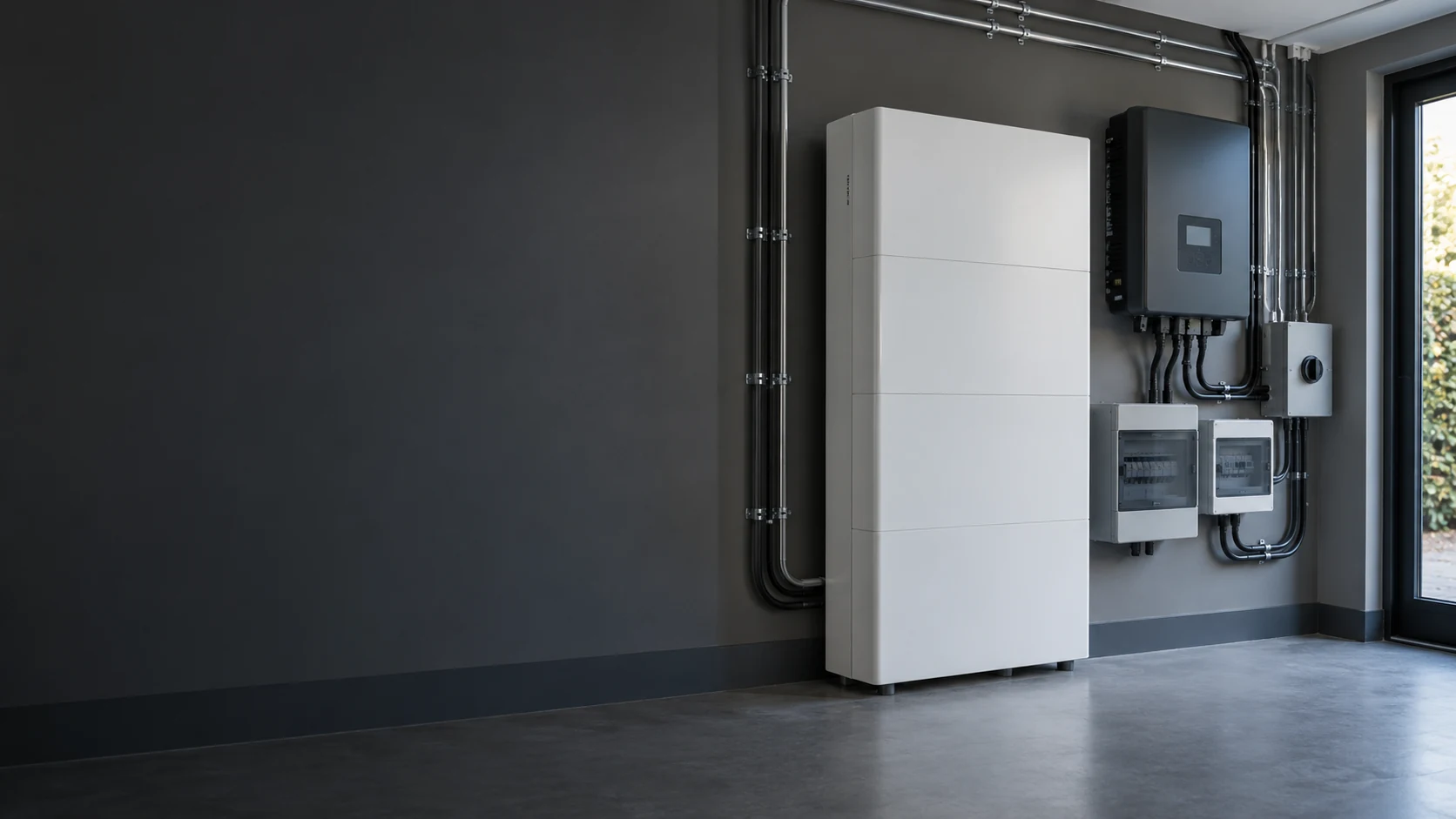
A home or commercial battery stores electrical energy temporarily so it can be used later. Charging stores energy chemically; discharging makes it available again as electricity.
Depending on the installation and settings, the battery can charge from solar panels or the electricity grid. The solar equipment and inverter must be technically compatible.
A battery management system monitors cell condition and temperature, among other factors. It limits charging and discharging to the permitted operating range.
The battery can supply energy when it is needed. An inverter provides the required conversion between the battery and the building’s AC electrical installation.
An energy management system can schedule charging and discharging using generation, consumption and configured goals. Available functions depend on the system and electrical connection.
Capacity in kWh describes how much energy can be stored; power in kW describes how quickly the battery can charge or deliver electricity. Conversion losses and technical operating limits apply. Backup power during a grid outage is not a standard feature: it requires compatible equipment and suitable electrical provisions. Financial results depend on usage, tariffs and control settings.
Request advice for your situation →Battery storage may be useful when electricity generation and consumption do not coincide or when you want to manage your own energy more effectively. We assess the options alongside your electrical installation and other building systems.
Financial results depend on consumption patterns, energy tariffs, grid connection and the selected system.
Request adviceSend electricity consumption figures, solar panel and inverter details, grid connection information and your energy contract. Tell us whether storage is for a home or business.
The price depends on storage capacity, equipment, controls and modifications to the electrical installation. We prepare a proposal for your situation.
This depends on its use and your VAT position. Our grants advice page links to the Dutch Tax Administration and De Centrale. Have the conditions assessed before installation.
Based in Dordrecht, we discuss projects across South Holland, including Rotterdam, The Hague, Capelle aan den IJssel and Barendrecht. Contact us to discuss work at your location.
Capacity is assessed from generation and consumption throughout the day, rather than just the number of solar panels. We discuss your storage goals, inverter, available space and grid connection, including controls and compatibility. Backup power requires equipment and connections designed for that purpose and is specified separately in the proposal.
Discuss your requirements →From a home to a commercial building: we provide technical and practical advice.